


She nodded. She went home. She did none of it.
She was not non-compliant. She was never taught. We train clinicians in how to teach patients, and we teach patients how to understand their own care.
Same information. Delivered so it can be used. That is the whole job.
Sources: United States Department of Education, National Assessment of Adult Literacy. Vernon et al., Low Health Literacy: Implications for National Health Policy. CRICO Strategies, Malpractice Risks in Communication Failures.
Take it in. Take it back.
This is not a program. It is a loop, and the loop is why one session is worth more than one room.
We teach clinicians how to teach
Clinicians are trained in medicine. Almost none are trained in how to explain it. When that changes, errors fall, adherence improves, and trust gets rebuilt, because being explained to is what being respected feels like in a clinical room.
We teach patients how to learn
Not what to think. How to understand, what to ask, what to track, what to bring. She stops being a passenger and becomes a member of her own care team.
She takes it back
To her sister, her mother, her coworker, her congregation. The resident teaches the next resident. This is where it stops being a program and starts being a spread.
The outcomes move
Fewer errors. Fewer avoidable admissions and emergency returns. Better screening and adherence. And downstream of all of it, reductions in cardiovascular disease and poor postpartum outcomes.
Three ways in.
Continuing medical education that gets measured
Your clinicians know the medicine. This teaches them to deliver it so a patient carries it home and acts on it. Every class takes the same knowledge assessment before and after, so you receive a result rather than an attendance sheet.
See what a session includesMenopause at work, and return to work after birth
The most experienced women on your team are managing symptoms nobody has named for them, and a share of them are quietly deciding whether to stay. Executive briefings and employee series, built for the people managing them too.
See the employer programsUnderstand what is happening in your body
Fertility, fibroids, endometriosis, postpartum, perimenopause, and the heart health nobody connects to any of it. Plain language, from a practicing surgeon, with nothing sold to you in a bottle.
2-minute quiz — coming soonFor health systems and training programs
A live or virtual program that teaches clinical teams how to teach patients. It works for physicians, residents, faculty, nurses, community health workers and students in the same room.
Three modules. The method, which is plain language, teach-back, and how to tell the difference between a patient who understood you and a patient who was being polite. Womb wellness across the life stages, used as the teaching material. And how to route a patient to resources that already exist in your community, because finding a problem you cannot route anywhere is not care.
Delivered as a single session or an institution-wide annual license, live, virtual or hybrid, and available as accredited continuing medical education in partnership with an accredited provider.
Where an outside organization funds the program, your institution receives it at no cost, content stays entirely under our control, and nothing is promoted from the podium.
Ask about a session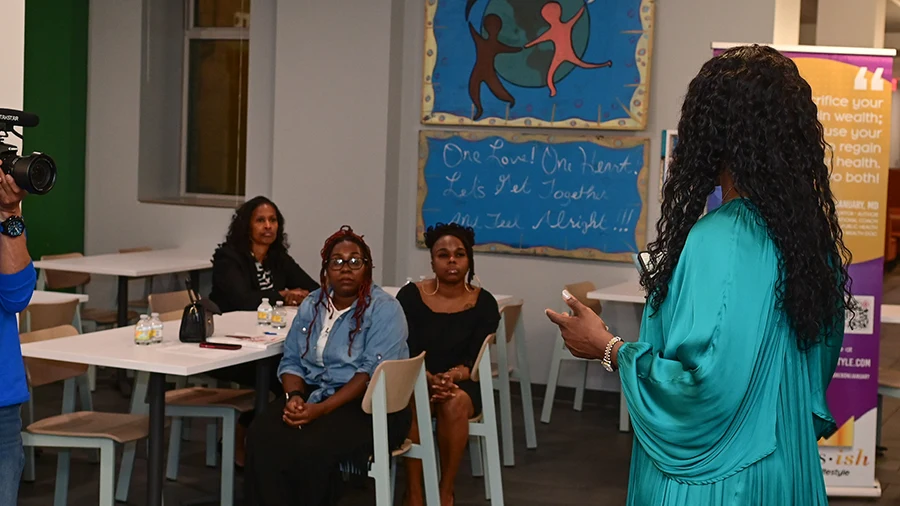
Recent classes walked in averaging two of five correct on the knowledge assessment. Most walked out at four or five. Every participant completes both.
For universities, residency programs and nursing schools.
Program directors and curriculum deans are solving a different problem than a hospital executive. This is built for that one.
Residency and fellowship programs
Residents are assessed on communication and are rarely taught it. This fits a didactic block, grand rounds, or an orientation week, and produces a documented, measured educational activity with a before-and-after score you can put in front of your own leadership.
Program directors, associate program directors, designated institutional officialsMedical schools
Slots into doctoring, clinical skills or communication coursework. Taught by a practicing surgeon, so students hear real cases rather than scripted scenarios. Already delivered at Roseman University College of Medicine.
Associate deans for curriculum and medical education, course directorsNursing and allied health programs
Health literacy is already in most nursing curricula in a way it is not in medical ones. This gives it a method students can use on a floor the same week, and a measurement to report.
Deans, program chairs, directors of clinical educationCampus and community programming
Wellness weeks, alumni weekends, student organization events and health fairs. Often paired with a clinician session on the same visit, so one trip serves both the school and the students.
Student affairs, alumni relations, student healthTry the assessment first. Put the pre-assessment in front of your learners before you book anything. When a cohort sees they got two of five right on questions about their own patient population, the conversation changes.
What we deliver.
Four formats, one method underneath all of them.
Continuing medical education and clinical training
Physicians, residents, faculty, nurses and students. Single sessions, grand rounds, or an institution-wide annual license. Measured before and after.
Health systems, residency programs, medical and nursing schoolsCorporate wellness programs
Menopause at work and return to work after birth. Executive briefings, employee series, and guidance for the managers around them.
Employers and benefits leadersCommunity health events and patient activations
Health fairs, faith communities, chambers of commerce, transitional housing and community organizations. Education delivered where people already are.
Community organizations, sponsors, public health partnersKeynotes, workshops and intensives
Signature keynote: The Weight We Carry, a physiological walkthrough of how stress lands in a woman's body. Live, virtual and hybrid.
Conferences, associations, organizations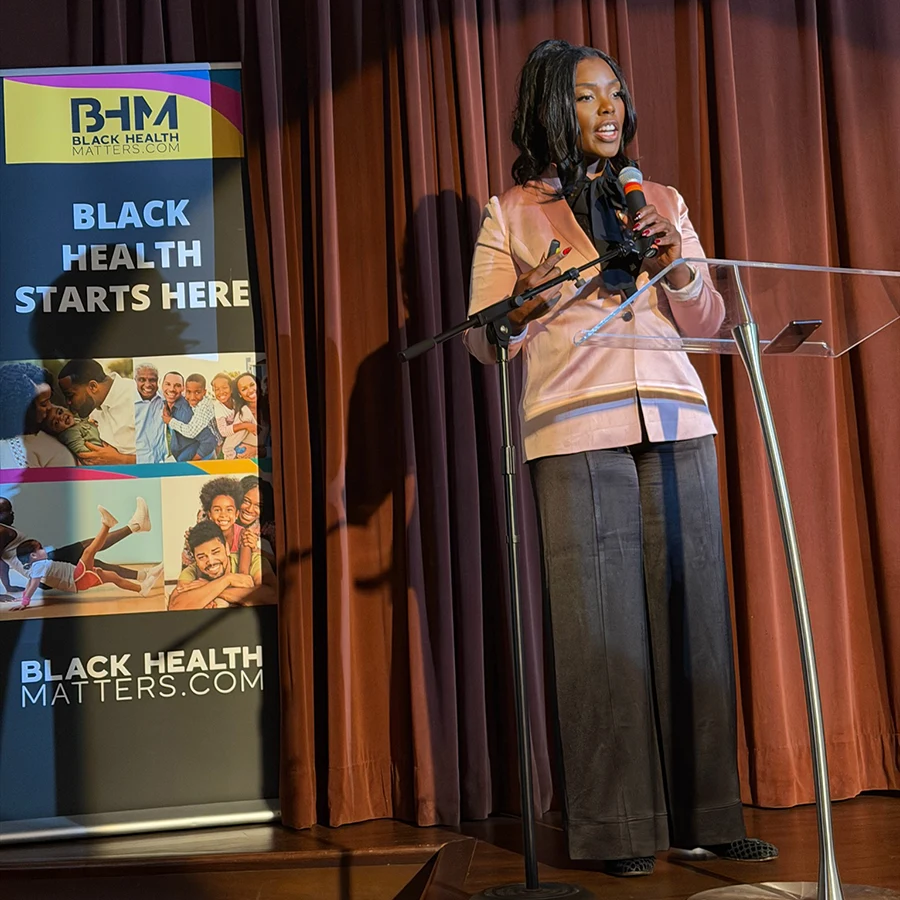
For employers
The most expensive thing companies are not talking about is happening to their most experienced people.
Menopause at work. What employees are actually managing, what changes help, and what managers should understand. Women in their forties and fifties hold the most institutional knowledge on most teams, and a meaningful share consider leaving over symptoms nobody named for them.
Return to work after birth. The physical and mental reality of the first six months back, which accommodations matter, and how to build a return that does not quietly push someone out.
Mental health support your people will use. Dr. January serves as Medical Director of LoveJoy Health, a mental health application built to report on engagement and outcomes rather than sign-ups alone.
Ask about employer programsFor women
You are not being difficult. You were never taught. Everything here is built to change that.
Womb to heart. In your twenties and thirties it looks like fertility, fibroids, endometriosis and postpartum. In your forties it becomes perimenopause, hormones and stress. In your fifties it shows up as cardiovascular disease, which is the leading cause of death in women and almost nobody frames it as a women's issue.
These are not separate chapters. Chronic stress drives inflammation. Inflammation drives metabolic change. That, plus the menopause transition, is what accelerates heart risk. Women live it as unrelated problems across twenty years. It is one process.
Paying attention to your womb at 38 is cardiovascular prevention for 58.
Start with the two-minute quiz. It tells you which of four things is actually driving your week, and what to work on first. From there, the recorded masterclass goes deep on what overload is doing in your body, and the program goes deeper still, with worksheets, a personalized wellness plan and time with Dr. January directly.
Media.
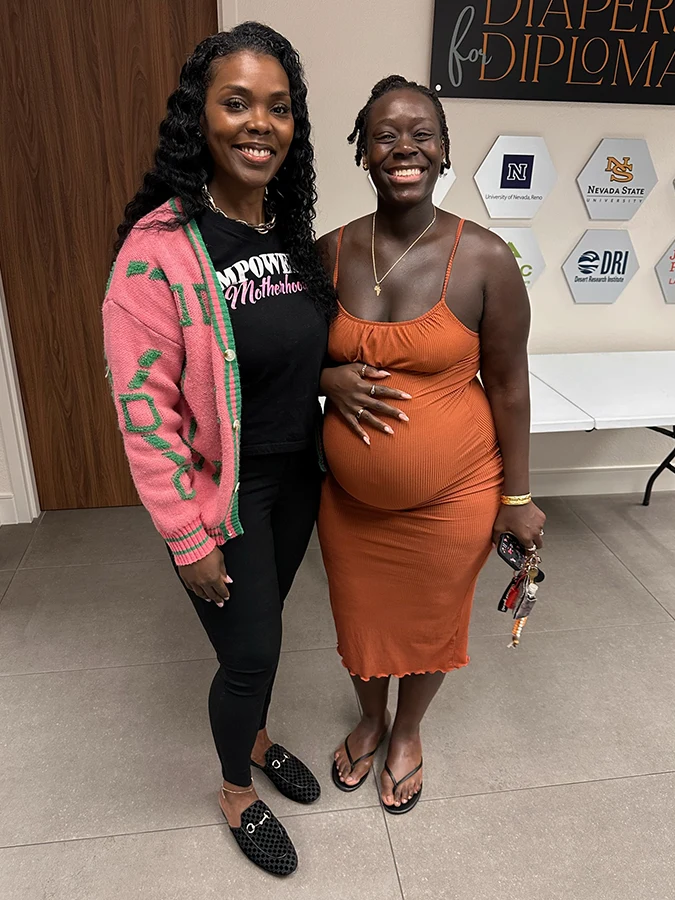
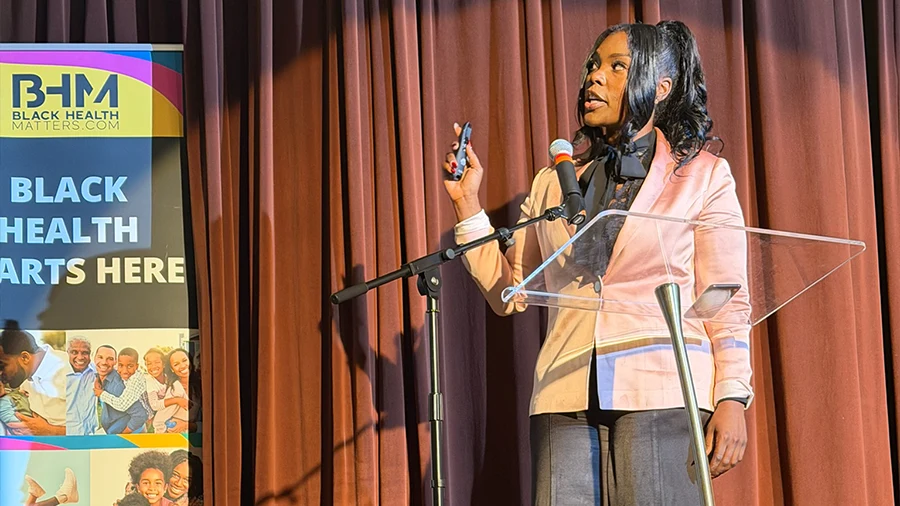
Producers book Dr. January because she can take a complicated women's health story and make it land in a segment, without the hedging and without the jargon. The same skill she teaches clinicians, applied on air.
On air and in print
National broadcast appearances, a recurring segment on Fox 2, ongoing appearances on Fox 26, and features in People and Parents. Former host of a podcast at CBS Radio, and a vetted source in CNN's rolodex.
The DoctorEJ Show
Most health television leaves you either frightened or sold something. This is the alternative, hosted by a physician who has spent twelve years explaining it one exam room at a time. In development, and available for underwriting as unbranded disease awareness.
Speaking and commentary
Keynotes, panels, grand rounds and expert commentary on women's health across the life stages. Recent stages include a national reproductive justice conference as a featured track lead.


For same-day and next-day requests, call rather than using the form.
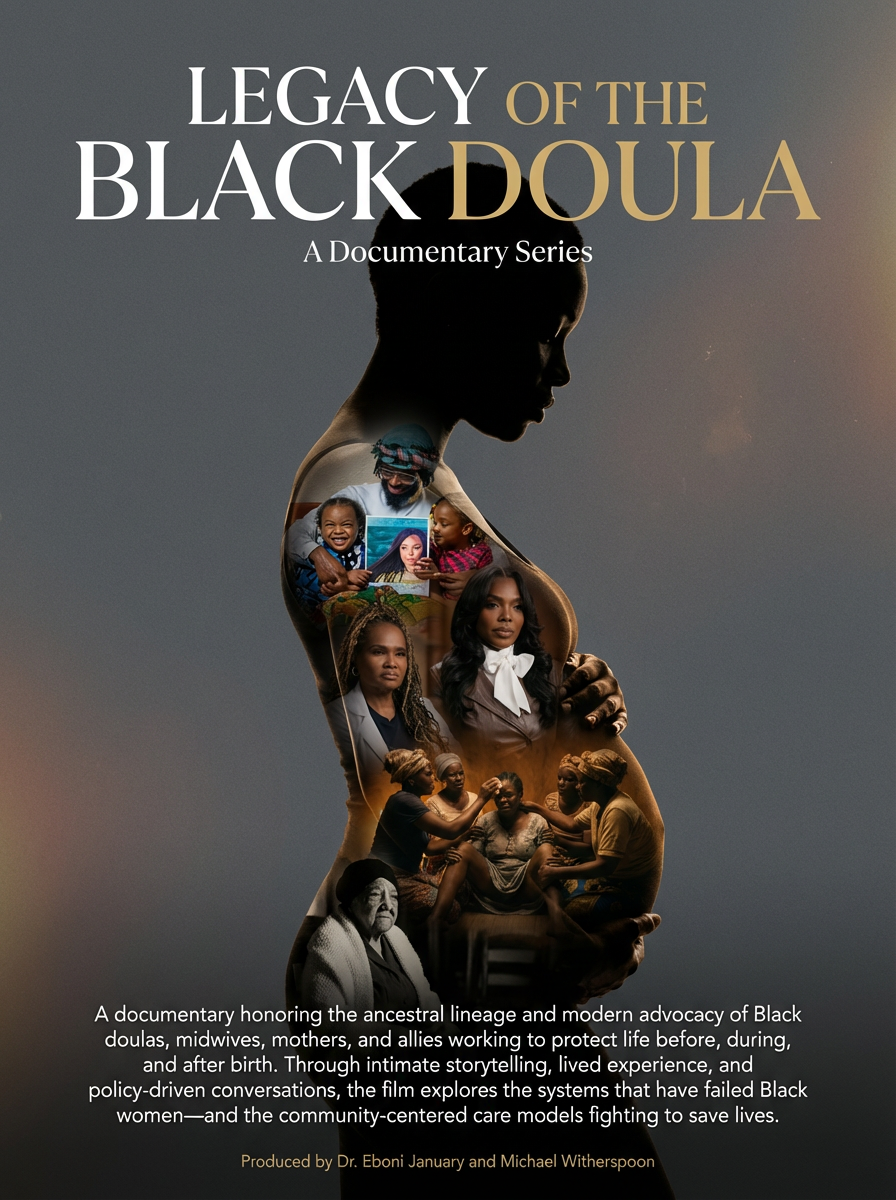
Legacy of the Black Doula
A documentary series produced by Dr. Eboni January and Michael Witherspoon.
The film honors the ancestral lineage and modern advocacy of doulas, midwives, mothers and allies working to protect life before, during and after birth. Through intimate storytelling, lived experience and policy-driven conversation, it examines the systems that have failed women in childbirth and the community-centered care models fighting to save lives.
The film is available for licensing, event screenings, and campaign use. Screenings pair naturally with a live session, a panel, or a community activation, and give partners something an audience will stay for.
We do this work through partnership.
Reaching patients where they already are requires the institutions they already trust.
Partner with us.
Organizations come to us for two reasons. They want a program delivered somewhere they cannot reach on their own, or they want an audience that already trusts a physician. Often both.
Fund a session or a series
You fund the program, the host institution receives it at no cost, and you are acknowledged at the opening and close. Single sessions, a regional series, or a national series across the year. Content stays under our control and nothing is promoted from the podium, which is precisely why we get into buildings a field team cannot.
Health plans, medical liability carriers, medical affairs teams, foundationsMedia amplification
A funded program does not have to stop at the door of the room you paid for. Partner programs can be carried across national broadcast and print, a documentary series, and our own channels, so what you support reaches well past the people who physically attended.
Brand and marketing teams, unbranded disease awareness, communicationsUnderwrite The DoctorEJ Show
A health program in development, available for underwriting as unbranded disease awareness and health education. Named acknowledgment, independent content, and sustained consumer reach alongside clinician reach. A different budget line from a session series, and usually a larger one.
Brand, media and unbranded disease awareness budgetsCo-create community programming
Health fairs, screening days, faith community activations, chambers of commerce, transitional housing and neighborhood events, built with you rather than delivered at you. This is where we already work, with federally funded research to show for it.
Community organizations, public health partners, corporate social impactWhat does not change, for anyone
Content is developed and controlled solely by DoctorEJ. No partner reviews or approves it. Nothing is promoted from the podium. Sponsorship is non-exclusive across categories, with one partner acknowledged per session. Accredited education stays entirely separate, with no partner funding, review or presence inside it. All financial relationships are disclosed. We do not take money from supplement, hormone or compounded product companies.

Dr. Eboni January, MD, FACOG
Board-certified obstetrician-gynecologist and surgeon. Twelve years in practice, more than 8,000 deliveries, licensed in fifteen states.
In 2018 her father had a massive stroke. She kept operating. Over the following months she lost thirty pounds and her cycle stopped. She went to her own doctor, who told her stress can change your cycle, and sent her home.
That doctor was not wrong. But nobody explained what was actually happening in her body, and she is a board-certified OB/GYN. If she walked out of that room without understanding, what happens to the woman who does not have her training?
She is Clinical Associate Professor at Roseman University College of Medicine, Principal Investigator on a federally funded HIV prevention and testing study with Washington University in St. Louis, and a founding Scientific Advisory Board member of the WINS Study at the Harvard T.H. Chan School of Public Health. She serves as Medical Director of V-Tech Solutions, Inc. and LoveJoy Health, on the Board of Trustees of Holt Health Academy, and as Board Director and Health Committee Chair of the Urban Chamber of Commerce.
She has practiced across HCA, Montefiore, Banner, UPMC, SSM, Sentara and OB Hospitalist Group, and has served as Principal Investigator on industry-sponsored women's health trials in uterine fibroids and endometriosis. She is a recipient of the Presidential Lifetime Achievement Award and a St. Louis American Salute to Excellence in Health Care honor, and a five-time bestselling author.
Questions we get asked.
How is this different from a communication skills course?
Two things. It is taught by a practicing board-certified OB/GYN and surgeon, so the clinical examples are real and the room does not dismiss them. And it is measured. Communication courses are graded on how the session felt. This one is graded on what changed.
Does it carry continuing medical education credit?
It can be delivered as an accredited activity in partnership with an accredited provider. Sponsor funding never supports, reviews or appears inside accredited education, and all financial relationships are disclosed.
Can an outside organization fund a session for us?
Yes, and it is common. The sponsor funds the program, your institution receives it at no cost, and the sponsor is acknowledged at the opening and close. Content is developed and controlled solely by DoctorEJ, and nothing is promoted from the podium.
What does a sponsor actually receive?
Named acknowledgment, attendance reporting by role and seniority, before-and-after knowledge scores for every session, and amplification across national broadcast, print and owned channels. What no one can honestly promise is attribution to a downstream sale.
Our clinicians will not sit through another training.
That is the right instinct. Put the pre-assessment in front of your team before you book anything. When people see they got two of five right on questions about their own patient population, attendance stops being the problem.
Do you sell supplements or hormone products?
No. Dr. January does not accept money from anything that promises to fix you in a capsule. No supplements, no hormone products, no compounded anything, and nothing claiming to treat, cure or prevent disease. Where she holds a financial relationship, she discloses it.